

Melhfa Elegance, Saharan Rituals & Moorish Beauty
Desert Nights, Tea Fires & the Poetry of Hassaniya Love
Weddings in Mauritania unfold like desert epics, unhurried, melodic, wrapped in gold and poetry. As dusk settles over Nouakchott or in the silence of an inland oasis town, you might hear the deep pulse of tbal drums echoing across sand courtyards. Groups of women respond with high, shimmering ululations as the bride appears draped in a luminous melhfa, its silk shifting between shades of emerald, fuchsia, or pure gold depending on how the lantern light strikes it.

Nearby, a groom in a flowing indigo darraa moves with quiet dignity, its deep blue fabric symbolizing nobility and desert resilience. The air fills with attaya, Mauritania’s iconic three-round tea, brewed over glowing coals. Each cup carries meaning: bitterness, strength, and finally sweetness, mirroring the stages of marriage itself.
The atmosphere is luxurious but intimate, rooted in Moorish refinement, Islamic devotion, and Saharan identity. Every detail matters: the perfumed incense drifting through tents, the whispered poetry sung by maddahates, and the gentle glow of candles flickering against dunes. Mauritanian weddings aren’t simply events, they’re living poems, centuries old yet endlessly renewed.
Where Is Mauritania?
Mauritania sits along the northwest shoulder of Africa, bordered by Senegal, Mali, Algeria, Western Sahara, and the Atlantic Ocean. This geography shapes its wedding traditions in profound ways. Along the coast, breezes from the Atlantic carry Swahili-Maghrebi influences into the celebrations, blending the elegance of ocean cities with traditional Moorish customs. In the inland Sahara, weddings feel more ancient, marked by nomadic symbolism, tea rituals, tent gatherings, and long nights filled with poetry under infinite skies.

Culturally, Mauritania aligns closely with its neighbors:
- Western Sahara & Morocco: melhfa fabrics, gold jewelry motifs, Hassaniya Arabic poetry
- Algeria: desert music traditions and ceremonial hospitality
- Mali: Arab-Berber influences, lineage customs, and shared wedding symbolism
Wedding customs in Mauritania mirror this cross-border Saharan identity: stately, poetic, spiritually grounded, and shaped by a landscape where ceremony and survival have always intertwined.
Why Couples Choose Mauritania for Their Wedding
Couples are drawn to Mauritania because its weddings feel timeless, equal parts spiritual, artistic, and deeply communal. There is a regal softness to the traditions: the gold-dusted bridal makeup (tebra), the cascading melhfa fabrics, the hypnotic rhythms of tbal drums, the poetic performances of women’s singing groups, and the gentle dignity of the groom’s attire.
For many Mauritanian diaspora couples, especially those living in France, Spain, Morocco, and the Gulf, returning home is about reconnecting with heritage. They want the slow beauty of multi-night celebrations, the emotional blessings of elders, and cultural rituals impossible to replicate abroad.
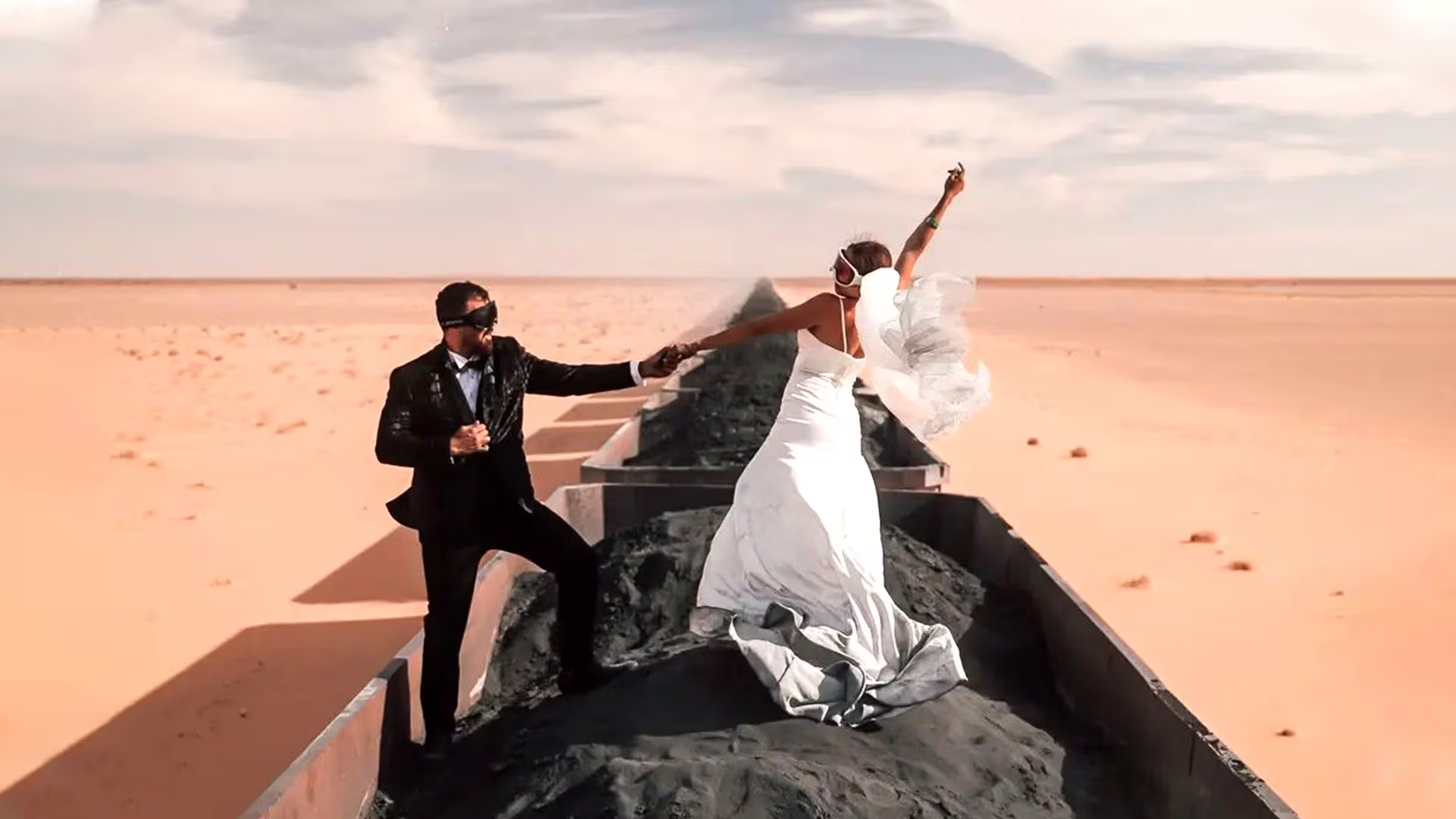
Modern couples also appreciate the unique aesthetic possibilities: camel processions, desert photography sessions, gold-adorned bridal stages, and receptions that feel like a fusion of Arab-Maghrebi glamour and Sahara mystique. With its blend of warmth, elegance, and spirituality, Mauritania offers a wedding atmosphere unlike anywhere else in the world.
Like what you are reading so far? Subscribe to get the latest blogs sent to your email.
Snapshot of Weddings in Mauritania
Mauritanian weddings typically unfold over several nights, structured both by Islamic rituals and centuries-old Saharan tradition. Festivities often begin with small family gatherings and build into elaborate celebrations led by women, spaces filled with singing, drumming, dancing, and beauty preparation.
The Nikah, or Islamic marriage contract, tends to be quiet and dignified, sometimes held in a family home, sometimes at a mosque, often attended only by close relatives. But the public celebration is vibrant and theatrical. Brides appear adorned in layers of gold jewelry, with their skin shimmering under stage lights after hours of tebra, the traditional gold and saffron makeup that symbolizes prosperity and beauty.
Music and poetry guide the rhythm of the night. Maddahate ensembles perform traditional praise songs, and tbal drummers accompany women as they dance, sing, and celebrate the bride. Tea is served continuously, dozens of rounds sometimes, and the celebrations can last until dawn.
Unlike many global weddings, Mauritania elevates the bride’s beauty rituals to an art form. Her attire, makeup, movement, and presentation are central to the cultural narrative of the wedding.
Cultural Mosaic: Moorish, Haratin, Pulaar (Fula), Soninké & Wolof Influences
Moorish (Bidan / Hassaniya Arab)
Moorish culture defines the core of Mauritanian wedding tradition. Brides wear brilliant melhfas, often embroidered or iridescent, paired with heavy gold jewelry that symbolizes lineage, wealth, and protection. Maddahate singers perform poetic praise songs, invoking beauty, virtue, and ancestral honor. Multi-night celebrations unfold in beautifully decorated courtyards, tents, or modern venues where drums, incense, and lanterns create an unforgettable atmosphere.
Haratin (Afro-Mauritanian Communities)
Haratin weddings blend Islamic devotion with vibrant sub-Saharan influences. Music is energetic, communal dancing plays a major role, and feasting is central to the ceremony. Fabric colors tend to be brighter and bolder, and cooking traditions, particularly large communal dishes, symbolize generosity and unity.
Pulaar / Fula
Pulaar communities emphasize elegance, lineage, and refined beauty. Brides often display intricate henna on hands and feet, layered jewelry, and carefully coordinated attire. Wedding customs honor elders deeply and reflect pastoral traditions through symbolic gifts and blessings. Music may include Fulani flutes or songs tied to pastoral life and ancestry.
Soninké
Soninké weddings follow highly structured marriage negotiations, reflecting deep historical ties to Mali and Senegal. Textiles and jewelry carry symbolic weight, and feasting is essential. Community honor, elder involvement, and elaborate ceremonial sequences define their weddings.
Wolof Communities
Influenced by Senegalese aesthetics, Wolof weddings in Mauritania feature bright fabrics, expressive dance lines, rhythmic drumming, and a strong emphasis on hosting. The celebration style is lively, colorful, and generous, blending Wolof charm with Mauritanian Islamic tradition.
Engagement & Family Negotiations
Engagement in Mauritania is a formal yet tender ritual, guided by elders and grounded in poetry, hospitality, and Islamic tradition. The groom’s family visits the bride’s home, exchanging greetings, sweets, tea, and blessings. Elders speak on behalf of the families, offering words of wisdom, good intentions, and sometimes short Hassaniya poetic lines praising unity and virtue.
Bridewealth negotiations may still occur, though in modern urban families they are often symbolic, focused more on mutual respect and the joining of households than on material exchange. Gifts such as melhfas, perfumes, jewelry, dates, or household items may be presented as signs of goodwill.
Attaya (tea) is served in rounds to close the meeting, its sweetness and warmth sealing the agreement and signaling a shared future between the two families.
Marriage Laws & Legal Requirements in Mauritania
Marriage in Mauritania is grounded in Islamic family law, which serves as both the spiritual and legal framework for most unions. A valid marriage requires the presence of a wali (guardian) representing the bride, two Muslim witnesses, and an agreed-upon mahr, or bridal gift, which can range from symbolic to significant depending on family custom. The Nikah is performed by an imam or authorized official, after which the contract is formally recorded to ensure recognition by the state. For civil purposes, couples typically complete a registration process so that the marriage is documented in national records, allowing it to be recognized both locally and internationally.
Foreign couples, or Mauritanians marrying non-citizens, must provide additional documentation, including passports, Certificates of No Impediment, and official proof of identity or marital status. Depending on origin, documents may need to be translated into Arabic or French and sometimes notarized or legalized through embassies. Once both religious and administrative steps are completed, the marriage is fully recognized, aligning Mauritania’s ancient customs with modern legal expectations.
The Religious Ceremony
The Nikah in Mauritania is intimate by design: a moment of spiritual clarity before the sensory richness of the wedding unfolds. Often held in a family living room, shaded courtyard, or neighborhood mosque, the ceremony centers on simplicity and devotion. The groom, or a representative on his behalf, offers the mahr, a symbolic and legally binding gift to the bride, affirming respect and responsibility. An imam recites verses from the Qur’an while elders sit attentively, murmuring prayers for harmony, fertility, and long life.
After consent is spoken and the contract is signed before witnesses, the room settles into a soft, reverent quiet: the kind of silence that feels like a blessing. Though understated in form, this small gathering carries extraordinary emotional weight, anchoring everything that follows in faith, intention, and the continuity of Islamic tradition.
The Community Celebration
If the Nikah is calm, the celebration that follows is a world of color, sound, and movement. Mauritanian weddings are famously immersive: evenings where the desert seems to breathe through tbal drums, swirling melhfas, and the perfume of burning incense. Women guide the rhythm of the night; elder singers, known as maddahates, deliver improvised praise poetry, honoring the bride’s beauty, the groom’s lineage, and the families joining together. Their voices, layered with handclaps and drums, create a pulse that carries the party until dawn.
The bride becomes the focal point of the evening, entering multiple times in different melhfas, each more elaborate than the last. Guests admire her gold jewelry, record videos, dance gently, laugh freely, and sip endless rounds of attaya tea: each pour stronger and sweeter than the last. The atmosphere is luxurious yet intimate, feminine yet communal, grounded in tradition yet filled with modern flair.
Wedding Attire & Symbolism
The melhfa is the heart of Mauritanian bridal identity: a long, flowing wrap of chiffon or silk-blend fabric draped with effortless grace. Brides may debut in vivid jewel tones, transition into pale pastels, and conclude the night in shimmering gold. The fabric isn’t merely clothing; it moves like poetry, carrying centuries of Moorish and Saharan elegance.
Complementing the mehndi is the legendary tebra: gold dust applied delicately across the bride’s face, arms, and décolletage. Under lanterns or stage lights, tebra gleams like desert sunlight, symbolizing radiance, blessing, fortune, and feminine power. It is one of the most visually striking beauty traditions in the world.
Grooms wear the darraa, a flowing robe in indigo or white. The indigo variety is especially symbolic: a color long associated with dignity, nobility, and Saharan identity. Their attire balances the bride’s glamour with a stately, calm presence.
Gold jewelry completes the ensemble: heavy necklaces, bracelets, earrings, and sometimes thick chains gifted by the groom’s family. Gold represents lineage, social status, protection, and marital prosperity, making it both adornment and symbolism intertwined.
To learn more about wedding attire around the world check out our blog: The Guide to Wedding Attire
Music, Dance & Performance
Mauritanian wedding music is mesmerizing: a blend of Saharan percussion and poetic vocals that feels both ancient and hypnotic. Instead of large orchestras, many celebrations feature women’s musical groups who blend tbal drumming, rhythmic handclaps, and lyrical praise songs in Hassaniya Arabic. Their melodies often recount family histories, complement the bride’s beauty, or celebrate the couple’s union in verses that feel like living poetry.
Dance is subtle and elegant, rooted in posture, rhythm, and presence rather than large gestures. Women move with slow, graceful sways, letting their melhfas float in soft arcs, while men may dance with minimal but confident steps. Every movement reflects the refinement of Moorish culture: composed, dignified, and expressive through rhythm more than motion.
Modern weddings sometimes incorporate light electronic beats beneath traditional sounds, but the essence remains unchanged: the music is meant to enchant, the dancing to honor, the night to celebrate lineage and love.
To help readers truly feel the rhythm of a Mauritanian celebration, we’ve included an authentic Hassaniya wedding song below. “Hassaniya Song for Dancing” by Khalifa Ould Eide and the legendary Dimi Mint Abba captures the essence of tbal percussion, poetic chant, and the graceful, hypnotic energy that defines Mauritanian dance. It’s the kind of music you’d hear as women lead the celebration, guests sway in soft circular motions, and the desert night fills with layered melodies.
Food & Wedding Feasts
Feasting is one of the highest expressions of Mauritanian hospitality. Throughout the night, servers circulate with trays of roasted lamb: a culturally prized dish: alongside couscous, spiced rice platters, grilled meats, and freshly baked breads. In coastal and river regions, fish dishes or Senegalese-inspired thieboudienne may appear, while desert regions sometimes feature camel meat, a symbolic delicacy.
Mint tea flows continuously, prepared in the traditional three-stage pour, each glass representing strength, sweetness, and joy. Guests never go hungry; abundance is a statement of honor, generosity, and the family’s pride in hosting the community.
Destination Weddings in Mauritania
While Mauritania is not yet a mainstream destination wedding hub, it offers some of Africa’s most atmospheric settings. In Nouakchott, upscale hotels and coastal venues overlook the Atlantic, providing elegant spaces for large receptions. In the desert, boutique lodges or family estates create cinematic backdrops with dunes glowing under sunset light. Traditional homes and courtyard venues offer a more intimate, ancestral feel, often decorated with lanterns, carpets, and flowing fabrics reminiscent of nomadic tents.
For couples seeking cultural depth, quiet luxury, and the romance of the Sahara, Mauritania delivers an experience unlike anywhere else.
Modern Weddings: Tradition Meets Today
Mauritania’s weddings continue to evolve while fiercely preserving their soul. Today’s celebrations may include LED-lit stages, floral installations, choreographed entrances, and photography teams capturing every moment for social media. Brides commission custom melhfas from tailors in Dubai, Morocco, or Dakar, while makeup artists blend traditional tebra with contemporary beauty styles.
Grooms often alternate between the classic darraa and sharp Western suits during various segments of the night. Yet beneath the glitz, the core elements: poetry, tea ceremonies, women-led singing, and the emotional weight of community: remain unchanged. Mauritania modernizes beautifully, but never loses itself.
Cultural Meaning of Marriage in Mauritania
Marriage in Mauritania transcends the couple; it is a merging of families, clans, and lineages, carried out under the guidance of Islamic principles. It symbolizes maturity, responsibility, and the formation of a stable household rooted in faith. The union also reinforces social alliances and cultural continuity: preserving Saharan identity across generations.
Through marriage, two families blend their histories, share honor, and commit to supporting a new household. It is both a personal milestone and a communal achievement.
Guest Etiquette
Guests are expected to dress elegantly, with women typically wearing flowing melhfas in bright or soft colors, and men donning daraa robes or formal suits. Respect for elders is essential: greetings follow a hierarchy, and politeness frames every interaction.
Dancing, celebrating the bride, accepting tea, and participating joyfully are all considered good form. Many families maintain private or women-only segments of the wedding; guests should follow cues regarding photography, as modesty and privacy often shape wedding customs.
The Heart of Weddings in Mauritania
Picture a courtyard bathed in golden lantern light… melhfas shimmering with dusts of gold… tbal drums rising like the desert wind… women laughing behind veils of incense smoke… and attaya tea poured slowly as blessings echo through warm, starlit air.
A Mauritanian wedding is a world of elegance and intimacy: a celebration woven from poetry, ancestry, faith, and the timeless beauty of the Sahara.
Key Takeaways
• Mauritania weddings blend Islamic rituals with Saharan, Moorish & West African traditions
• The melhfa, darraa & gold tebra makeup are cultural icons
• Music is poetic, rhythmic & women-led
• Feasting & tea ceremonies reflect hospitality & honor
• Multi-night celebrations emphasize beauty, lineage & spiritual grounding
Leave a Reply